
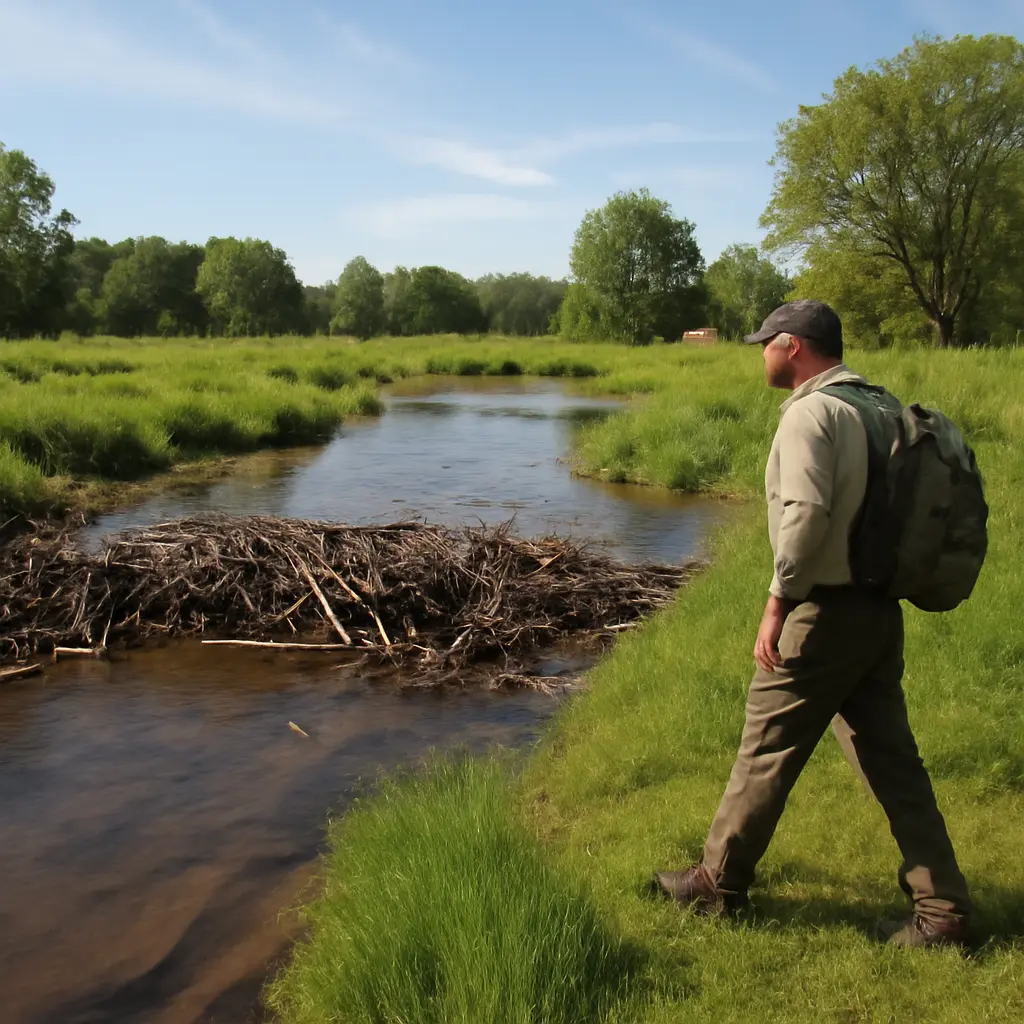
Animals are more than inhabitants of vulnerable landscapes: through burrowing, grazing, trampling, nesting, and moving seeds, they can alter how soil holds water and resists erosion. These effects depend on the species and setting—some animals stabilize ground, while others can worsen soil loss when their populations or grazing pressure are poorly managed. Research on beavers, prairie dogs, earthworms, and livestock shows how animal activity can influence vegetation, soil structure, water flow, and ecosystem recovery, making wildlife and land management important parts of erosion resilience.
Animals shape erosion control and landscape resilience
Erosion is the detachment and movement of soil or rock by water, wind, ice, or gravity. Animals affect those processes by changing vegetation cover, creating or maintaining channels and wetlands, mixing soil, and redistributing seeds and nutrients. The same action can have opposite effects: grazing may expose bare soil if too intense, yet carefully managed grazing can help maintain plant communities and reduce accumulated dry material. The United Nations Convention to Combat Desertification estimates that up to 40% of the world’s land is degraded, underscoring why effective erosion management matters for food production, water quality, biodiversity, and communities.
The most useful way to understand this surprising role is to connect animal behavior with landscape outcomes. Engineers such as beavers can slow water and build wetlands; burrowing animals can affect infiltration and soil movement; and grazing animals can either protect or damage ground cover depending on management. Together, these examples show that resilience is not simply the absence of disturbance, but the capacity of ecosystems to absorb change and continue functioning.
Animals influence erosion control through ecosystem engineering
An ecosystem engineer is an organism that modifies the physical environment in ways that affect resources available to other organisms. Ecologist Clive G. Jones and colleagues defined ecosystem engineering in a 1994 paper as the physical modification, maintenance, or creation of habitats by organisms. In erosion-prone landscapes, this includes animals that build dams, dig burrows, disturb soil, graze vegetation, or move seeds. These activities can change runoff speed, soil stability, plant cover, and the retention of water and sediment.
The main animal-based pathways are not interchangeable. Water-retaining structures can reduce stream energy; burrowing can increase soil mixing and create pathways for water; and grazing changes the amount and arrangement of protective vegetation. Understanding these mechanisms helps explain why a species may be beneficial in one landscape and harmful in another.
Beavers slow water and retain sediment
Beavers are widely recognized as ecosystem engineers because their dams transform stream channels into ponds and wetlands. By slowing water, these structures can encourage sediment to settle, spread flows across floodplains, and create wet habitats that persist through dry periods. A 2020 review by the U.S. Geological Survey describes beaver-related structures as influencing hydrology, sediment transport, and habitat conditions, although outcomes vary with stream type, location, and dam durability.
Beaver activity can also create trade-offs. Flooding may benefit wetlands and downstream water storage but can affect roads, farmland, or infrastructure. In western North America, “beaver dam analogues”—human-built, permeable structures intended to mimic some effects of beaver dams—are used in stream restoration. They are not a substitute for beavers or a guarantee against erosion; they are a site-specific tool whose performance depends on design, maintenance, and watershed conditions.
Burrowing animals alter soil structure and water movement
Burrowing animals modify soil by excavating tunnels, bringing deeper material to the surface, and creating openings through which water and air can move. Prairie dogs, ground squirrels, and other burrowers can influence plant patterns and soil processes across grasslands. The result is complex: burrows may improve local infiltration or create microhabitats, while digging and reduced vegetation can leave some patches more exposed to runoff and wind.
The scale and context of disturbance matter. A 2013 synthesis in the journal Ecology by Eldridge and colleagues examined how bioturbation—soil disturbance by living organisms—affects ecosystem processes in drylands. It emphasized that effects depend on the organism, the intensity of disturbance, and existing soil and vegetation conditions. Burrows therefore should not be treated as inherently protective or damaging: their influence needs to be assessed alongside slope, rainfall, soil type, and plant cover.
Earthworms and soil fauna influence aggregation
Earthworms and other soil organisms can change soil structure by mixing organic matter and mineral particles, forming casts, and creating pores. Stable soil aggregates are clusters of particles that resist breakdown and can help limit erosion, while pores affect how water enters and moves through soil. The Food and Agriculture Organization of the United Nations describes soil organisms as contributors to soil structure, nutrient cycling, and soil functions.
These benefits are conditional rather than universal. Earthworm species differ in how they use soil, and introduced earthworms can alter forest-floor conditions in places where native ecosystems evolved with few or no earthworms. Soil biology is therefore best understood as part of a wider system: organic matter, vegetation, compaction, moisture, and land use all influence whether animal activity improves soil resistance to erosion.
Grazing animals affect ground cover and erosion resilience
Grazing animals influence erosion chiefly by consuming plants and trampling soil. Vegetation shields the ground from raindrop impact, slows surface runoff, and helps bind soil with roots. If livestock remove too much cover or repeatedly travel over wet ground, bare patches and compaction can increase runoff and sediment movement. Conversely, grazing managed to maintain adequate plant cover can be compatible with healthy rangelands and may support more diverse vegetation patterns.
Livestock management determines whether grazing protects or degrades soil
Rotational and adaptive grazing systems manage where and when livestock feed, allowing some areas time to recover. Their purpose is not simply to move animals on a fixed schedule, but to adjust grazing pressure to plant growth, weather, soil moisture, and land condition. The U.S. Department of Agriculture’s Natural Resources Conservation Service identifies maintaining plant cover and managing grazing pressure among the practices that can help conserve rangeland soil and water.
There is no single stocking rate that prevents erosion everywhere. A 2013 assessment by the United Nations Food and Agriculture Organization and partners found that livestock production occupies a substantial share of the world’s agricultural land, while also stressing that environmental effects vary with production systems and management. For land managers, practical indicators include the proportion of bare ground, plant recovery, soil compaction, streambank condition, and visible sediment after storms.
Wild and native herbivores shape vegetation mosaics
Wild herbivores such as bison, deer, and antelope can create a patchwork of grazed and ungrazed areas. These mosaics may support varied plant heights and habitats, but concentrated browsing or grazing can prevent regeneration and expose soil. In North American grasslands, the return of bison to some conservation landscapes is part of broader efforts to restore ecological processes, rather than a stand-alone erosion treatment.
The ecological value of herbivores depends on population levels and movement. Where animals can move across large areas, pressure may be distributed differently than where fences, water points, or limited forage concentrate use. Monitoring plant cover and soil condition helps distinguish beneficial disturbance from chronic overuse.
Animal-driven resilience supports water, habitat, and climate adaptation
Resilience describes the capacity of a system to absorb disturbance and continue to function. Animals can contribute to this capacity by supporting wetland storage, soil structure, vegetation diversity, and seed dispersal. These functions matter as intense rainfall, drought, wildfire, and land-use change put greater pressure on landscapes. The Intergovernmental Panel on Climate Change identifies land degradation and climate risks as interconnected challenges, while emphasizing that responses must be adapted to local conditions.
Beaver wetlands can buffer variable water conditions
Beaver-created wetlands can store water and spread flows, potentially helping stream corridors remain wetter during dry periods. A 2022 study in the journal Nature by Fairfax and Whittle documented the persistence of beaver-dammed riparian areas during drought and wildfire in a particular western U.S. landscape. This is evidence of a potential resilience benefit, not proof that beavers prevent drought or fire across all regions.
A useful illustration would be a watershed diagram comparing an incised, fast-flowing stream with a beaver-influenced reach, showing water spreading across a floodplain and sediment settling behind dams. Such a graphic should also indicate local constraints, including infrastructure, fish passage, and flood risk.
Animal movement can aid seed dispersal and recovery
Animals move seeds on their bodies or in their digestive systems, helping plants colonize disturbed ground. Birds, mammals, and grazing animals can all contribute to seed dispersal, although the distance and success of dispersal vary by species and habitat. Plant recovery is important for erosion resistance because roots reinforce soil and above-ground growth reduces exposure to wind and rain.
Seed dispersal works best when suitable habitat remains available. If repeated disturbance removes seedlings or soil conditions are too degraded, the arrival of seeds alone will not restore cover. Conservation plans therefore pair animal movement and habitat connectivity with measures such as reducing excessive grazing, protecting streambanks, and restoring native plants.
Managing animal effects requires evidence and local context
Animal-based erosion strategies work when managers identify both the ecological mechanism and the risks. A beaver dam may benefit a low-gradient stream but create problems near a road; grazing may maintain vegetation in one season but cause damage when soils are saturated. A practical assessment combines field observations with rainfall, slope, soil, vegetation, and land-use information.
- Track ground cover, bare soil, and vegetation recovery at consistent intervals.
- Inspect streambanks, culverts, and drainage paths after major storms.
- Adjust livestock access and stocking pressure to soil moisture and forage conditions.
- Assess wildlife structures, such as beaver dams, for both habitat benefits and infrastructure risks.
- Use before-and-after monitoring to determine whether an intervention reduces sediment movement over time.
A simple monitoring chart could compare bare-ground percentage, streambank stability, and sediment observations across seasons or management treatments. These indicators do not replace formal erosion measurements, but they help reveal whether a landscape is gaining or losing protective cover and function.
Conclusion: animals are partners in erosion resilience
Animals influence erosion control through ecosystem engineering, soil disturbance, grazing, and seed dispersal. Beavers can slow water and retain sediment; burrowers and soil fauna can reshape soil structure; and herbivores can either maintain diverse vegetation or expose ground when pressure is excessive. Across all these examples, outcomes depend on species, landscape, and management.
The broader lesson is that erosion resilience is built by functioning ecosystems, not by one species or technique alone. Landowners, conservation groups, and planners can support that resilience by protecting habitat, monitoring soil and vegetation, and choosing locally appropriate practices. Further reading from the U.S. Geological Survey, the FAO, and the Natural Resources Conservation Service can help guide site-specific decisions.
Sources: Jones, C. G., Lawton, J. H., and Shachak, M., “Organisms as Ecosystem Engineers,” Oikos, 1994, https://doi.org/10.2307/3545850; United Nations Convention to Combat Desertification, “Land and Life: The Role of Sustainable Land Management in Achieving Land Degradation Neutrality,” https://www.unccd.int/resources; U.S. Geological Survey, “Beaver-Related Restoration and the Coevolution of Science, Policy, and Practice,” 2020, https://www.usgs.gov/; Eldridge, D. J. et al., “Impacts of Invertebrates on Ecosystem Functioning in Dryland Systems,” Ecology, 2013, https://doi.org/10.1890/12-1602.1; Food and Agriculture Organization of the United Nations, “Soil Biodiversity,” https://www.fao.org/soils-portal/soil-biodiversity/en/; U.S. Department of Agriculture, Natural Resources Conservation Service, “Rangeland Management,” https://www.nrcs.usda.gov/; Food and Agriculture Organization of the United Nations, “Tackling Climate Change Through Livestock,” 2013, https://www.fao.org/; Fairfax, E. and Whittle, A., “Smokey the Beaver: Beaver-Dammed Riparian Corridors Stay Green During Wildfire Throughout the Western United States,” Nature, 2022, https://doi.org/10.1038/s41586-022-04823-4; Intergovernmental Panel on Climate Change, “Climate Change and Land: An IPCC Special Report,” 2019, https://www.ipcc.ch/srccl/