
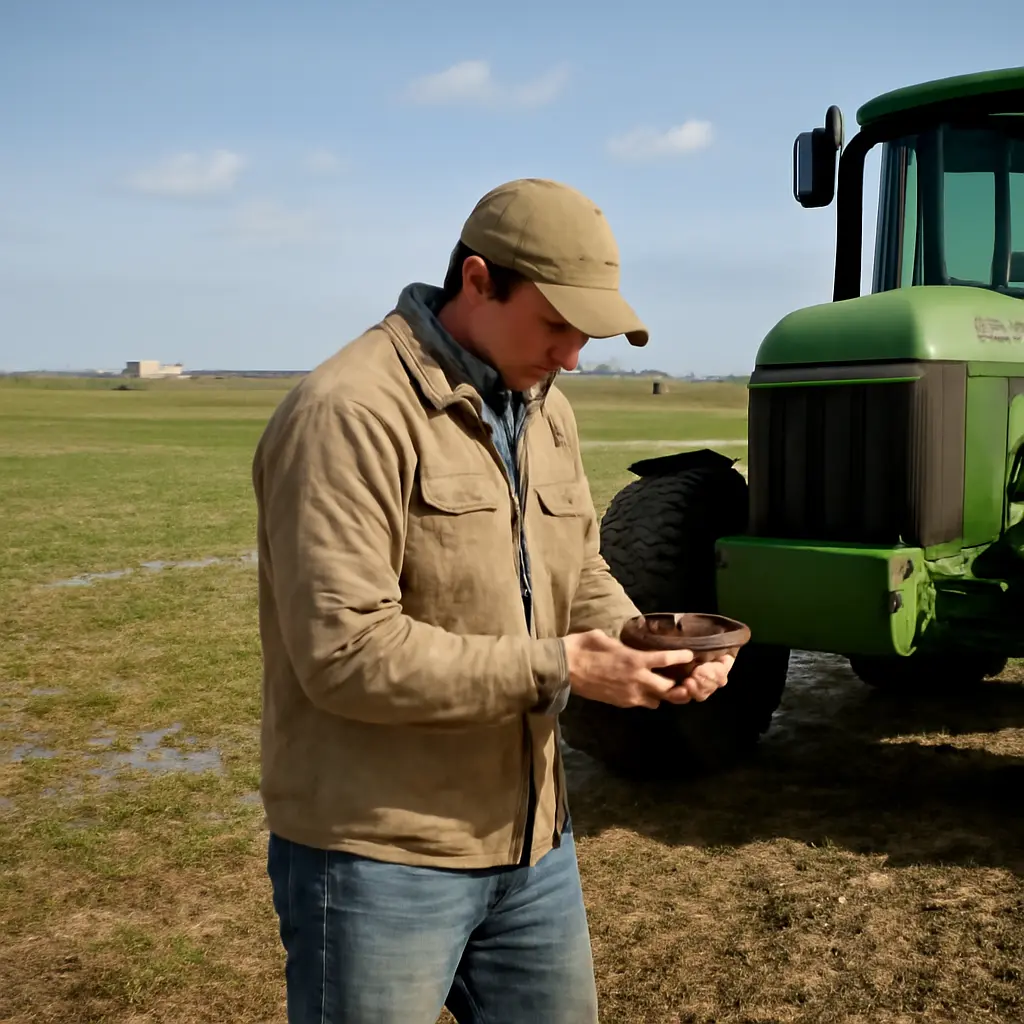
A field should be worked when its soil is ready—not simply because the calendar says spring. “Field readiness” means the soil can support the planned operation without excessive compaction, smearing, or clod formation. Waiting for suitable conditions protects soil structure, improves seedbed quality, and can prevent costly rework. The practical test is straightforward: check moisture and soil behavior at working depth, consider drainage and field variability, and delay tillage or traffic if the soil is wet enough to deform.
Soil readiness determines when spring fieldwork should begin
Soil readiness is the condition in which soil is dry and firm enough for a specific field operation. It is not a single date or universal moisture percentage: texture, organic matter, drainage, tillage depth, equipment load, and the operation itself all matter. The University of Minnesota Extension advises farmers to avoid working soil when it is too wet, because tillage can compact soil and create clods that are difficult to break down.
That caution matters beyond the day’s fieldwork. Compaction can restrict root growth and water movement, while smeared or compacted seedbeds can impede emergence. The USDA Natural Resources Conservation Service (NRCS) identifies soil structure and pore space as important to infiltration, aeration, and root development. There is no single national statistic that captures the cost of working every field too wet; the risk is site-specific, which makes field inspection more useful than a calendar rule.
The soil-ball test offers a quick field check
A practical readiness check is to take soil from the depth the implement will disturb, squeeze it into a ball, and gently press or drop it. If it stays slick, forms a shiny ribbon, or compresses into a dense lump, it may be too wet to work. If it crumbles readily rather than smearing or holding a hard shape, conditions are more promising. This is a screening test, not a substitute for local guidance: clay soils behave differently from sandy soils, and moisture can vary substantially across one field.
Soil texture and drainage change the timetable
Fine-textured soils, including many clays, generally retain more water and are especially vulnerable to smearing when wet. Coarse-textured sandy soils often drain sooner, but can still be damaged by heavy traffic or disturbed when conditions are unsuitable. Low spots, compacted headlands, and poorly drained areas may remain unfit after higher ground is ready. Check representative locations—including the wettest sections—before committing the whole field.
Wet-soil damage explains why waiting can pay
Wet-soil damage occurs when pressure from tires or tillage equipment compresses soil pores or when tools deform and smear soil rather than fracturing it. The consequence depends on where the damage occurs, how severe it is, and whether it can be alleviated. Compaction near the surface may affect seed placement and emergence; deeper compaction can limit roots’ access to water and nutrients.
Compaction reduces pore space and root access
Soil pores hold air and water and provide pathways for roots. When wet soil is compressed, large pores can be reduced, restricting infiltration and aeration. NRCS guidance describes healthy soil structure as essential to water movement and root growth. A field may look dry on top while the layer below remains wet, so inspect at the depth of likely wheel traffic or tillage—not only the surface.
Smearing and clods can undermine the seedbed
Smearing happens when a tool slides through plastic, wet soil, sealing surfaces or sides of the worked zone. Clod formation can follow when wet soil is cut, lifted, and then dries into hard aggregates. Both conditions can complicate seed placement and leave an uneven seedbed. More passes are not a reliable fix: they can increase fuel use and traffic while further breaking down structure or deepening the damage.
Spring fieldwork decisions should follow operation and conditions
“Fieldwork” includes distinct operations—tillage, planting, fertilizer application, and equipment travel—and each has different soil and timing requirements. A field that can support a light operation may not be ready for a heavy tractor or deep tillage. The best decision weighs agronomic urgency against the likely cost of damage.
Tillage should wait until soil fractures, not smears
Tillage is the mechanical loosening or turning of soil. Work only when soil at the intended depth crumbles under pressure instead of forming a slick ribbon or compressed slab. Where a field is unevenly dry, consider waiting, treating only ready areas, or using a lower-disturbance approach rather than forcing a uniform schedule across different soil conditions.
Planting requires both trafficability and a suitable seed zone
Trafficability is the ability of soil to carry machinery without unacceptable rutting or compaction. Planting also requires a seed zone that allows consistent depth, seed-to-soil contact, and emergence. A workable surface does not guarantee that the seedbed is ready below it. Check moisture and structure around the planned seed depth, and follow crop-specific recommendations from a local extension service.
Controlled traffic and fewer passes can limit risk
Controlled traffic confines machinery to established lanes, reducing the area exposed to wheel loads. Fewer passes and avoiding unnecessary travel can also lower the chance of compaction. These practices do not make wet soil safe to work, but they can help limit damage when field operations are necessary. Keep heavy equipment off the wettest areas where possible, and avoid turning or repeated stopping on vulnerable ground.
A practical readiness routine beats a fixed spring date
A repeatable inspection routine helps turn the principle into a decision. Check several parts of the field, assess soil at working depth, note recent rain and drainage, and consider the weight and depth of the planned operation. Recheck after weather changes: a brief sunny spell may dry the surface without making the subsoil fit for traffic.
- Inspect high, low, and historically wet areas rather than relying on one test location.
- Take a handful of soil from the depth the implement will disturb or the tires will load.
- Look for smearing, shiny surfaces, persistent ribbons, rutting, or soil that holds a dense shape.
- Match the operation to conditions; postpone heavy traffic or deep tillage if the soil is still plastic.
- Follow local extension recommendations and keep notes on where damage or delayed drying tends to occur.
A useful visual for farm planning is a field map marking drainage patterns, wet spots, and traffic lanes. Such a map can help prioritize inspections and avoid treating the entire field as if it dries uniformly. It should complement, not replace, hands-on checks.
Conclusion: let soil condition—not the calendar—set the pace
Soil readiness is the basis for sound spring fieldwork. Moisture tests and field inspection help identify when soil will crumble rather than smear; understanding compaction and seedbed risks explains why a short delay can protect longer-term productivity; and operation-specific decisions reduce unnecessary damage. Check the soil at working depth, pay attention to field variability, and consult local extension guidance before entering marginal ground. The right time to work is when the field is ready—not merely when spring has arrived.
Sources: University of Minnesota Extension, “Soil compaction: Causes and concerns,” https://extension.umn.edu/soil-management-and-health/soil-compaction; USDA Natural Resources Conservation Service, “Soil Health,” https://www.nrcs.usda.gov/conservation-basics/natural-resource-concerns/soils/soil-health