
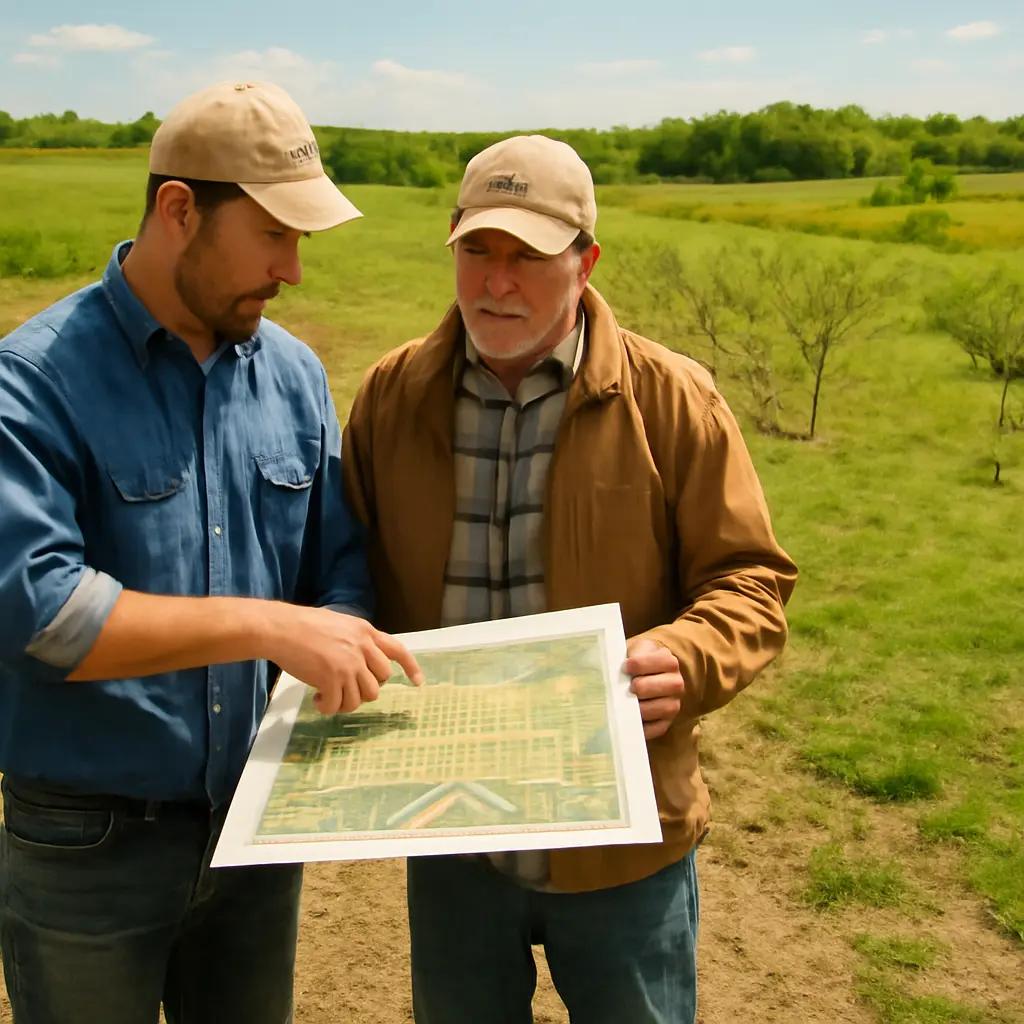
Agroforestry—the deliberate integration of trees and shrubs with crops or livestock—works best when people understand the “blueprints”: the site-specific plans, skills, and support that guide what to plant, where to place it, and how to manage it over time. Research synthesized by the USDA National Agroforestry Center shows that well-designed systems can provide multiple benefits, including improved soil and water protection, diversified farm products, and habitat. But outcomes depend on choices such as species, spacing, climate, labor, and markets. This article explains what agroforestry planning involves, how its main practices differ, what evidence and real-world programs show, and how farmers and advisers can turn a design into a workable plan.
Agroforestry planning defines the blueprint for a working system
Agroforestry planning is the process of matching trees, crops, livestock, and management practices to a particular farm or landscape. The USDA National Agroforestry Center describes agroforestry as the intentional integration of trees and shrubs into crop and animal farming systems to create environmental, economic, and social benefits. A practical blueprint translates that broad definition into site-level decisions: goals, layout, species, establishment methods, maintenance, and measures of success.
The need for careful design is substantial. The Food and Agriculture Organization of the United Nations estimates that agriculture accounts for about 70 percent of global freshwater withdrawals. Trees can help protect soil and water, but they also compete with crops and pasture for light, water, and nutrients if placed or managed poorly. Planning therefore does not mean simply adding trees; it means designing interactions so the combined system suits local conditions and the people who manage it.
A blueprint connects goals to site conditions
A farm blueprint begins with a clear purpose. A producer might want to reduce wind damage, stabilize a streambank, provide shade for livestock, diversify income, or create wildlife habitat. The plan then assesses soil, slope, drainage, climate, existing vegetation, farm operations, and available labor. USDA conservation-planning guidance emphasizes evaluating resource concerns and selecting practices suited to the site rather than applying a one-size-fits-all design.
The design should also account for time. Trees may take years to provide products or mature shade, while establishment costs, watering, weed control, pruning, and protection from livestock arise earlier. A useful plan sets milestones—such as survival rates, erosion indicators, crop yields, or product sales—and identifies who will monitor them. Those details connect ecological ambitions to farm budgets and daily work.
Technical assistance turns plans into implementable decisions
Technical assistance is the expert support that helps land managers assess a site, compare practices, prepare designs, and access cost-share programs. The USDA Natural Resources Conservation Service (NRCS) offers conservation planning and financial assistance for eligible practices, while the National Agroforestry Center provides research and technical resources. Local extension specialists, foresters, conservation districts, and experienced producers can contribute knowledge about regional species, pests, markets, and maintenance.
Assistance matters because small design choices can have long consequences. Row orientation affects sunlight and machinery access; species selection influences survival and product value; and spacing affects both tree growth and crop competition. Plans should be revisited as conditions change, including drought, market shifts, new pests, or changes in farm ownership.
Agroforestry practices put different blueprints to work
The main agroforestry practices are distinct forms of the broader design approach. The USDA National Agroforestry Center identifies five widely recognized practices in the United States: alley cropping, silvopasture, windbreaks, riparian forest buffers, and forest farming. Each combines woody plants with agricultural production or conservation in a different arrangement. Choosing among them depends on the farm’s goals, landscape, and capacity to manage trees.
Alley cropping combines tree rows with crops
Alley cropping places rows of trees or shrubs within alleys where crops are grown. The trees may produce nuts, fruit, timber, or other products, while the crop alleys remain in production. A sound plan considers row spacing, shade over time, equipment width, tree-root competition, and whether the chosen crops can tolerate changing light conditions. The USDA National Agroforestry Center notes that alley cropping can diversify farm income and provide conservation benefits, but its success depends on matching the tree-crop combination and management schedule to the site.
Silvopasture integrates trees, forage, and livestock
Silvopasture deliberately combines trees, forage, and livestock on the same land. It differs from unmanaged wooded grazing because the trees, pasture, and grazing system are planned together. Design decisions include tree density, forage species, livestock rotation, fencing, water access, and protection of young trees. Shade can offer livestock a refuge from heat, while tree products may diversify income; however, excessive shade or poorly timed grazing can reduce forage and damage seedlings. The blueprint must balance animal welfare, pasture productivity, and long-term tree growth.
Windbreaks and riparian buffers protect working landscapes
Windbreaks are strategically placed rows of trees and shrubs that reduce wind exposure around fields, farmsteads, or livestock areas. Their design depends on the direction and speed of prevailing winds, desired protection distance, species height, porosity, and maintenance needs. Riparian forest buffers, by contrast, are vegetated zones beside streams and other waterways. They can help intercept sediment and nutrients, stabilize banks, and provide habitat, but their width and plant composition should reflect local soils, slopes, water conditions, and conservation objectives.
These practices illustrate why a blueprint is more than a planting map. A windbreak must be positioned to protect the intended area without creating unwanted shade or obstructing farm operations. A buffer must be designed for its watershed role and protected from disturbance. In both cases, long-term success depends on establishment care and maintenance, not simply planting day.
Forest farming makes use of an existing tree canopy
Forest farming is the cultivation or management of marketable products beneath a forest canopy. Products may include medicinal plants, mushrooms, decorative greens, or other understory goods. The practice requires knowledge of canopy shade, soil moisture, species requirements, harvest timing, and market access. Unlike establishing a new tree-based system, forest farming often begins by assessing existing woods and deciding whether selective management can improve conditions for an understory crop while maintaining forest health.
Evidence and field experience show why design matters
Agroforestry can support production and conservation, but results vary by practice, location, and management. The evidence is strongest when claims are tied to particular outcomes and settings rather than presented as guarantees. Research reviews and government programs document potential benefits, while farm examples show that implementation also depends on financing, labor, technical knowledge, and dependable markets.
The benefits depend on the goal and the measurement
The World Agroforestry Centre’s synthesis of agroforestry research describes how trees in agricultural landscapes can contribute to soil protection, diversified products, and climate resilience, while stressing that outcomes are context-specific. For example, a riparian buffer is evaluated partly by its role in protecting water, whereas an alley-cropping system may be assessed through crop performance, tree growth, and farm revenue. Monitoring should therefore use indicators linked to the blueprint’s stated goals instead of relying on a general claim that trees are beneficial.
A useful visual for a farm plan is a site map showing tree rows, crop or grazing zones, waterways, access routes, and monitoring points. A companion chart can track annual tree survival, maintenance costs, yields, and conservation indicators. Together, these tools make trade-offs visible and help managers adjust the system as trees mature.
Conservation programs can reduce implementation barriers
In the United States, NRCS conservation programs can provide technical and financial assistance to eligible landowners and producers, subject to program rules and local availability. The USDA’s Conservation Stewardship Program, for example, supports conservation activities on working lands, while the Environmental Quality Incentives Program can help address identified resource concerns through approved practices. Assistance does not remove every cost or guarantee a particular outcome, but it can help producers move from a concept to a professionally supported plan.
Farm-scale examples show the value of long-term support
In the United States, the Savanna Institute works with farmers and partners to advance perennial agriculture and agroforestry, including technical support and demonstration efforts. Its work reflects a broader lesson: farmers often need more than seedlings. They need locally appropriate designs, establishment guidance, peer learning, and routes to market for products that may take years to mature. Regional extension and conservation organizations can provide similar connections, though the services and funding available differ by location.
A practical case study should record the starting conditions, design choices, costs, labor, survival, yields, and lessons learned—not just the final appearance of a planting. Sharing that information helps neighboring producers judge whether a system could fit their own soils, climate, equipment, and business plans.
A workable agroforestry blueprint is adaptive
Agroforestry works better when the people responsible for it understand the design and can adapt it. Planning links farm goals to site conditions; technical assistance translates those goals into species, spacing, and management choices; and distinct practices—from alley cropping to forest farming—apply the approach in different ways. Evidence and field experience support potential benefits, but also show that results depend on local conditions, sustained care, and realistic measures of success.
Farmers and land managers can begin by identifying one production or conservation goal, mapping the relevant parts of the property, and consulting a local extension forester, NRCS office, conservation district, or agroforestry organization. Ask for a plan that includes costs, maintenance, monitoring, and a timeline—not only a planting list. That blueprint can help trees become a durable part of a productive working landscape.
Sources: USDA National Agroforestry Center, Agroforestry Practices, https://www.fs.usda.gov/nac/practices/; USDA National Agroforestry Center, What Is Agroforestry?, https://www.fs.usda.gov/nac/about/; Food and Agriculture Organization of the United Nations, Water Use in Agriculture, https://www.fao.org/water/en/; USDA Natural Resources Conservation Service, Conservation Planning, https://www.nrcs.usda.gov/getting-assistance/technical-assistance/conservation-planning; USDA Natural Resources Conservation Service, Environmental Quality Incentives Program, https://www.nrcs.usda.gov/programs-initiatives/eqip-environmental-quality-incentives; USDA Natural Resources Conservation Service, Conservation Stewardship Program, https://www.nrcs.usda.gov/programs-initiatives/csp-conservation-stewardship-program; World Agroforestry, Agroforestry: A Pathway to Achieving the Sustainable Development Goals, https://www.worldagroforestry.org/; Savanna Institute, Agroforestry, https://www.savannainstitute.org/