
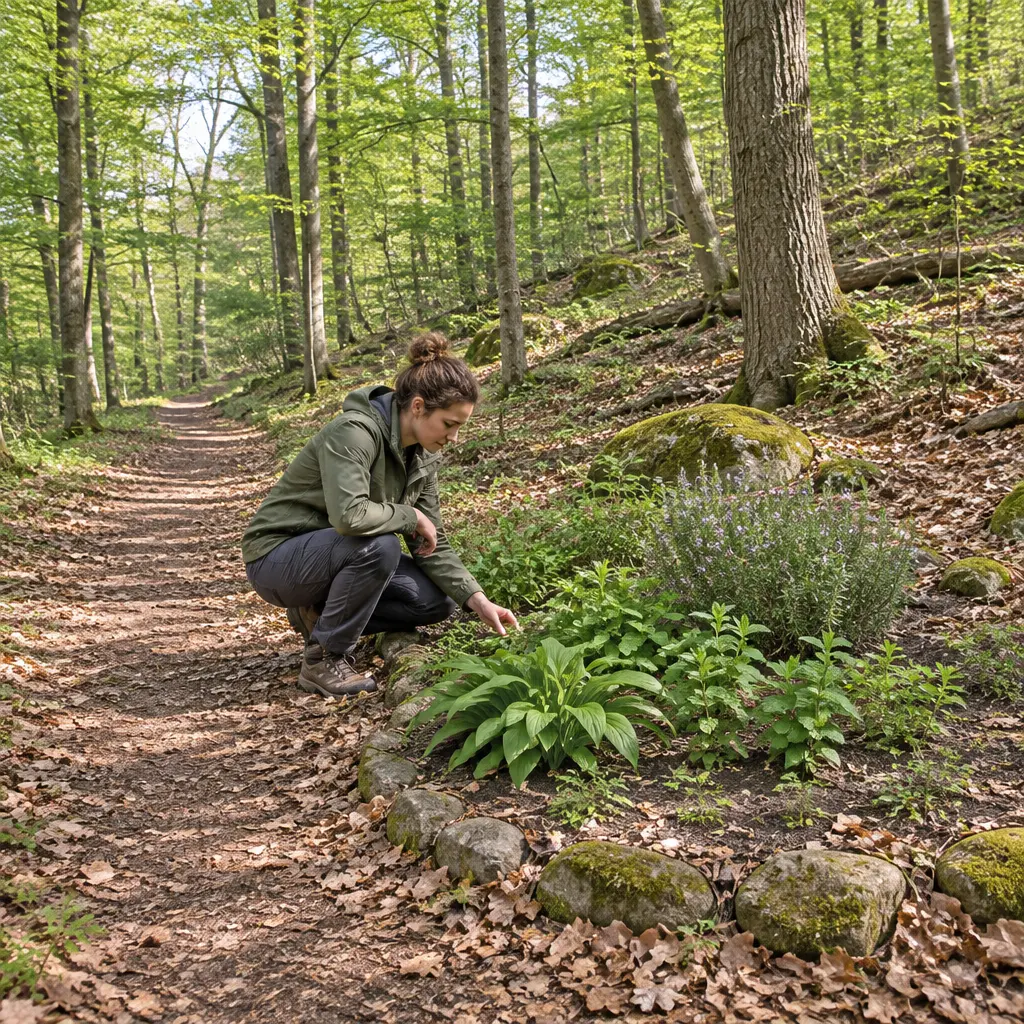
Forest farming is the intentional cultivation of useful crops beneath an existing forest canopy. For retirees and part-time growers, it can offer a gradual, small-scale way to produce foods, botanicals, and specialty products without clearing woodland—provided the site, crop, labor, and market fit. The USDA National Agroforestry Center identifies forest farming as one of five agroforestry practices, while the U.S. Forest Service describes it as managing forests to produce marketable understory crops. The practical opportunity is real, but so are the constraints: shade varies, establishment can take years, and harvests and income are rarely guaranteed. A sound plan starts with land and labor, then matches crops to woodland conditions, tests markets, and manages for ecological and financial resilience.
Forest Farming Planning for Retirees and Part-Time Growers
Forest farming means cultivating and managing non-timber products under a maintained forest canopy. The USDA National Agroforestry Center defines it as the cultivation of high-value specialty crops under the protection of a forest canopy that has been modified or maintained to provide the right shade level. This distinguishes forest farming from simply gathering wild plants: the grower actively manages habitat, crop density, access, and harvest.
The practice can suit retirees and part-time growers because a small planting can be developed in stages, and some crops need seasonal rather than daily attention. But “part-time” does not mean effortless. Site preparation, weed control, monitoring, harvest, processing, recordkeeping, and sales all require time. The U.S. Forest Service notes that forest-farmed products can include medicinal plants, edible fungi, fruits, nuts, and decorative materials; each has distinct growing and marketing requirements.
Forest farming compared with wild harvesting and woodland gardening
Forest farming is a managed production system, not a license to harvest whatever grows in the woods. Growers may establish plants, improve habitat, monitor populations, and harvest according to a plan. Wild harvesting, by contrast, relies primarily on naturally occurring populations, while woodland gardening often emphasizes household use, aesthetics, or diverse plantings rather than a marketable crop. These approaches can overlap, but commercial goals require careful attention to land ownership, permits, plant identification, sustainability, and buyer standards.
Why the approach may fit a retirement or part-time schedule
Forest farming can be scaled to available land, strength, time, and capital. A grower might begin with a small trial bed, learn the site through a full growing season, and expand only after confirming plant survival and buyer interest. The model may also retain trees and forest cover rather than converting the whole parcel to open-field production. However, it is not automatically low-cost or profitable: fencing, planting material, tools, infrastructure, processing, and the wait until a saleable harvest can all affect the economics.
Forest Farming Site Selection for Retirees and Part-Time Growers
Site selection is the process of matching crop requirements to a woodland’s light, soil, moisture, slope, tree cover, and access. The USDA Forest Service’s forest-farming guidance emphasizes that the canopy is managed to provide suitable growing conditions; a forest is not uniformly shaded, and conditions can change with season, tree species, and past disturbance. A crop that thrives in one corner may fail nearby.
Assessing light, soils, and moisture
Before planting, map shade patterns, observe drainage after rain, and assess soil texture, pH, organic matter, and compaction. Soil tests from a university extension service or accredited laboratory can identify whether a proposed crop is compatible with the site. Avoid assuming that rich-looking leaf litter guarantees suitable soil conditions. Also note frost pockets, steep or slippery ground, invasive plants, deer pressure, and places where water stands for extended periods.
A useful first step is a simple site map showing access routes, canopy openings, wet areas, slopes, and trial plots. Keep records of planting dates, weather, survival, and labor. This turns a general impression of “good woods” into evidence for deciding whether to expand.
Matching crops to the woodland and the grower
Crop choice should reflect both ecology and physical workload. Some forest-grown medicinal plants prefer substantial shade and moist, well-drained soils; others require more light or specialized host conditions. Mushrooms may depend on particular substrates and reliable moisture, while berries and nuts can require different canopy levels, pruning, or wildlife protection. Consult regional extension publications and experienced local growers rather than relying on a generic crop list.
For retirees, ergonomic access matters as much as plant suitability. Consider whether beds can be reached without steep climbs, whether harvest containers can be carried safely, and whether tasks can be completed without prolonged bending or heavy lifting. Raised work surfaces, short paths, smaller plots, and shared labor can make a project more sustainable over time.
Forest Farming Crop Choices and Market Fit
Forest-farmed crops are non-timber products produced under or alongside a forest canopy. Common categories include medicinal and culinary plants, mushrooms, fruits and nuts, and decorative products such as greenery. The right choice is not simply the crop with the highest advertised price; it is the crop that can be grown legally and reliably, harvested at a manageable scale, processed to buyer specifications, and sold into an accessible market.
Medicinal and culinary plants
Medicinal and culinary forest crops may include regionally appropriate native or cultivated herbs and roots. Their value depends on accurate identification, cultivation quality, harvest timing, drying and storage, and a documented chain of custody. Buyers may require particular plant parts, moisture levels, packaging, or proof that material was cultivated rather than collected from wild populations. Before investing, ask prospective buyers about specifications, volume, price basis, and whether they are currently accepting new suppliers.
Regulations can apply to protected species, public lands, interstate commerce, labeling, and health claims. The U.S. Fish and Wildlife Service and state wildlife or natural-resource agencies provide relevant rules for protected plants and collection; food and supplement sales may trigger additional requirements. Never market a product as treating or curing disease without understanding applicable laws.
Mushrooms, fruits, nuts, and other products
Edible fungi, woodland berries, nuts, and other specialty products can diversify a forest enterprise, but they differ greatly in production and handling. Mushroom cultivation may require prepared logs or other substrates, moisture management, and prompt post-harvest handling. Fruits and nuts may depend on suitable light, pollination, wildlife management, and enough harvest volume to justify sales. Perishable products need a realistic plan for cooling, processing, transport, and food-safety compliance.
A diversified planting can reduce reliance on one crop, but too many crops can increase complexity. For a part-time grower, a focused trial with one or two products is often easier to monitor and sell than a broad planting with separate harvest calendars and buyer requirements.
Testing demand before planting at scale
Market research means confirming who will buy a product, in what form, at what quality and volume, and on what schedule. Contact herbal-product companies, specialty food businesses, farmers’ markets, restaurants, cooperatives, and local processors before purchasing substantial planting stock. Ask for written specifications and distinguish retail prices from the price a producer actually receives. A high retail price does not demonstrate that a grower can sell a crop profitably.
The USDA National Agroforestry Center and Cooperative Extension programs provide planning resources, while state and regional agroforestry networks can help locate technical assistance. A small pilot plot is a practical market-and-production test: it can reveal crop survival, labor demand, and buyer feedback before the grower commits more land or money.
Forest Farming Workload, Safety, and Seasonal Management
Forest farming management is the coordinated work of establishing, tending, monitoring, harvesting, and maintaining crops in a woodland. For a part-time operation, the key is to plan around seasonal peaks rather than assuming work will be evenly distributed. Planting, weed control, monitoring, harvest, drying, and sales may all cluster in particular weeks.
Designing a manageable annual work plan
Create a calendar that lists tasks by month, estimated hours, physical demands, and weather sensitivity. Include time for checking fences, controlling invasive plants, inspecting crop health, cleaning tools, and keeping harvest and sales records. Small, clearly bounded plots make it easier to estimate effort. If work exceeds the time available, reduce the planted area, simplify the crop mix, or arrange help before the busy season.
The National Institute for Occupational Safety and Health identifies agriculture as a work environment with significant injury and health risks. Woodland growers should account for uneven ground, heat, ticks, falling branches, sharp tools, lifting, and solo work. Use suitable footwear and protective equipment, keep communication available, and avoid hazardous tasks when working alone or when conditions are unsafe.
Protecting forest health and crop sustainability
A forest-farming plan should protect the woodland’s long-term condition, not just the saleable crop. Retain appropriate canopy and soil cover, limit unnecessary disturbance, prevent erosion, and monitor for invasive species and crop pests. Harvest conservatively and follow species-specific guidance; removing too much plant material or damaging roots can undermine future production. Keep records of what was planted and harvested so that changes in survival and yield are visible over time.
The USDA Forest Service’s agroforestry resources frame forest farming as a way to combine forest stewardship with production of non-timber goods. That does not mean every forest crop automatically improves habitat or biodiversity. Outcomes depend on the species chosen, site preparation, harvesting intensity, and management practices.
Forest Farming Economics and Risk Management
Forest farming economics are the costs, revenues, time horizon, and risks associated with producing and selling woodland crops. Reliable profit estimates are highly site- and crop-specific, so broad claims about income should be treated cautiously. Establishment costs may include planting stock, soil testing, fencing, tools, irrigation or water access, processing equipment, permits, packaging, and transport. Revenue depends on survival, harvestable quantity, product quality, buyer access, and price.
Build a realistic budget and timeline
Prepare a budget with one-time setup costs and recurring expenses, then record labor hours as well as cash spending. Include a conservative scenario in which some plants fail, harvest is smaller than expected, or a buyer is unavailable. The USDA Natural Resources Conservation Service may offer technical assistance or cost-share programs for eligible conservation and agroforestry practices, but availability and eligibility vary by program, location, and application cycle. Confirm current details with the local NRCS office before relying on assistance.
Consider the intended role of the project. A woodland enterprise may be a modest supplemental income source, a source of household food, a stewardship activity, or a long-term business. These goals call for different investment levels and measures of success. Avoid borrowing or making large purchases based solely on projected gross revenue.
Reduce risk through diversification and partnerships
Risk management includes limiting initial investment, testing crops on a small area, identifying more than one potential buyer, and maintaining records that support sound decisions. Partnerships with neighboring landowners, extension educators, conservation districts, or grower associations can provide shared knowledge and equipment. For retirees, family or community help can also cover time-sensitive harvest tasks when illness, travel, or weather disrupts a plan.
A real-world planning example is the staged pilot approach promoted in extension and agroforestry outreach: growers first assess the site and market, then establish a small planting, document performance, and expand only when results support it. This is not a guarantee of income, but it limits the cost of learning and helps align production with actual demand.
Conclusion: A Practical Forest Farming Start
Forest farming can provide retirees and part-time growers with a flexible way to produce non-timber crops while retaining forest cover. The essential decisions are linked: define the goal, assess the site, select crops suited to both woodland and workload, verify buyer requirements, plan for safety and stewardship, and budget for a realistic timeline. Small pilot plots and careful records are more dependable than promises of quick returns.
Start by contacting your state Cooperative Extension office, a local agroforestry specialist, and potential buyers. Review land-use and harvest rules, test the soil, map the woodland, and choose one manageable trial. Expand only after the crop, workload, and market have all demonstrated a good fit.
Sources: USDA National Agroforestry Center, Forest Farming, https://www.fs.usda.gov/nac/practices/forest-farming.php; USDA Forest Service, Forest Farming, https://www.fs.usda.gov/nac/practices/forest-farming.php; USDA Natural Resources Conservation Service, Agroforestry, https://www.nrcs.usda.gov/conservation-basics/conservation-by-state/agroforestry; National Institute for Occupational Safety and Health, Agriculture, Forestry, and Fishing, https://www.cdc.gov/niosh/agriculture/; U.S. Fish and Wildlife Service, Endangered Species, https://www.fws.gov/program/endangered-species