
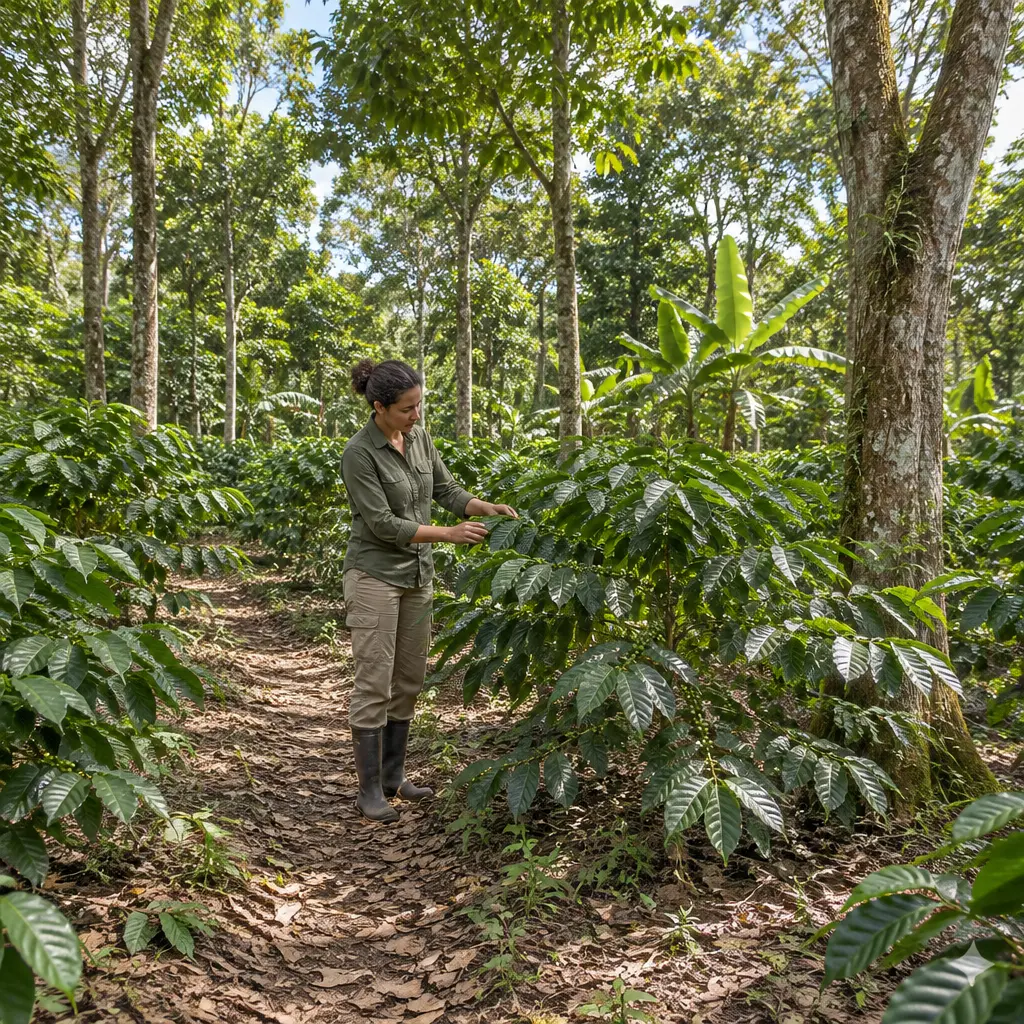
Forest farming is the intentional cultivation of crops beneath a managed forest canopy. As a climate adaptation strategy, it can diversify farm income while retaining tree cover, supporting soil and water protection, and creating growing conditions suited to shade-loving plants. Its benefits depend on local climate, species selection, forest management, and reliable markets: forest farming is not a universal substitute for conventional agriculture, but it can be a useful part of climate-resilient land management. The sections below explain its definition and main forms, assess adaptation benefits and limitations, and review practical examples and planning considerations.
Forest farming’s climate-adaptation role
The U.S. Department of Agriculture’s National Agroforestry Center defines forest farming as the cultivation of high-value specialty crops under a forest canopy that is modified or maintained to provide the desired light conditions. It is one of the five widely recognized agroforestry practices, alongside alley cropping, silvopasture, riparian forest buffers, and windbreaks. Unlike clearing woodland for open-field production, forest farming combines an existing or established tree cover with an understory crop.
The climate-adaptation case rests on several linked functions. Tree canopies can moderate temperature and wind, shade can reduce direct solar exposure, and tree roots and litter can help maintain soil structure and cover. These functions may buffer some crop and land-management risks, although outcomes vary by site and should not be confused with a guarantee against drought, flooding, pests, or extreme heat. The USDA Climate Hubs describe agroforestry as a set of practices that can help farms and communities respond to climate risks while providing other environmental and economic benefits.
The scale of climate change makes such options relevant. The Intergovernmental Panel on Climate Change (IPCC) reports that global surface temperature in 2011–2020 was about 1.1°C above the 1850–1900 average. The U.S. National Climate Assessment documents increasing risks from extreme heat, heavy precipitation, drought, and other climate-related stresses across regions. These broad trends do not predict the outcome for an individual forest farm, but they underscore why producers may seek diversified systems that retain ecological functions as conditions change.
Forest farming practices and crop types
Forest farming is an umbrella practice rather than a single production system. The defining feature is intentional management of both the forest environment and the marketable understory crop. The USDA National Agroforestry Center distinguishes forest farming from simply gathering wild plants: forest farmers manage light, competing vegetation, crop establishment, and harvest to support sustained production.
Wild-simulated and woods-cultivated crops
Wild-simulated production establishes a crop in woodland while minimizing disturbance, aiming to produce plants with characteristics valued in wild-harvest markets. Woods-cultivated production uses more active management, such as prepared beds, soil amendments, or deliberate canopy adjustment. The distinction matters for adaptation: lower-disturbance approaches may preserve forest-floor conditions, while more intensive methods can improve crop establishment but require greater investment and careful protection of soil and habitat.
Examples include American ginseng, goldenseal, ramps, mushrooms, and selected medicinal or culinary herbs. Their suitability is species- and location-specific. A crop adapted to cool, moist woodland may be vulnerable if local summers become hotter or soils dry more frequently, so growers should assess both current site conditions and projected climate risks before planting.
Mushroom production on logs and forest residues
Forest mushroom cultivation commonly involves inoculating logs or other suitable woody material with edible fungi, including shiitake. It can turn carefully selected low-value or thinned wood into a product while maintaining tree cover. Log production is not automatically climate resilient: drought can slow or disrupt fruiting, and the supply of suitable wood depends on forest condition and management. Shade, moisture, species choice, and harvest timing all affect results.
Medicinal plants, edible understory crops, and tree products
Forest farms may combine understory herbs and edible plants with nuts, fruits, or other products from the trees themselves. This layered production can spread income across products with different harvest schedules and market conditions. Crop diversity can reduce reliance on a single commodity, but it does not eliminate financial risk: each crop needs an appropriate site, labor, processing, and a buyer who meets legal and quality requirements.
Climate benefits and adaptation mechanisms
Forest farming’s adaptation value comes from how its components interact. Trees influence microclimate and water movement; understory crops make productive use of shaded space; and diversified products may improve a farm’s capacity to absorb shocks. The IPCC’s assessment of climate adaptation emphasizes that responses need to be tailored to local exposure, vulnerability, and social and ecological conditions. Forest farming should therefore be evaluated against specific local risks rather than treated as a universally effective intervention.
Canopy shade and temperature buffering
A managed canopy changes the amount of sunlight reaching the forest floor and can reduce exposure to direct solar radiation. For shade-adapted crops, that environment may help avoid damaging heat and excessive light compared with an exposed site. The same canopy can also limit light too much, reduce crop growth, or compete for water, so canopy density and species composition must match the crop’s needs. No single shade percentage is appropriate for every crop or region.
This is a microclimate benefit, not a claim that forest farming prevents regional heat waves. Growers should monitor understory temperature, soil moisture, and crop performance through seasons, and adjust management where canopy conditions become unsuitable.
Soil cover, water, and erosion
Tree roots, leaf litter, and understory vegetation can help keep soil covered and support its structure. These features may reduce erosion from rainfall and help protect soil from direct exposure. The U.S. Environmental Protection Agency identifies climate-related increases in heavy precipitation as a concern for erosion and runoff in many areas, making soil protection an important adaptation objective.
Forest cover does not necessarily mean more water is available to crops. Trees also use water, and competition can be significant during drought. Site assessment should consider soil depth, drainage, slope, seasonal rainfall, and the water needs of both canopy trees and understory crops. Where water stress is likely, crop choice and canopy management should be adjusted accordingly.
Biodiversity and ecological resilience
A well-managed forest farm can retain habitat features and support a more diverse production landscape than a cleared monoculture, although biodiversity outcomes depend on how the site is managed. Keeping native trees, deadwood where safe, and varied understory vegetation can contribute to habitat complexity. The Convention on Biological Diversity and the IPCC both identify biodiversity and ecosystem function as important considerations in climate resilience.
Crop diversification can also spread biological risk, but different crops may share vulnerabilities to the same drought, pest, or temperature shift. Maintaining genetic and species diversity, monitoring pests, and avoiding overharvesting are therefore important elements of long-term resilience.
Income diversification and risk management
Forest farming can create additional revenue streams without converting all woodland to open production. A mix of crops may offer different harvest windows and reduce dependence on one product. However, many specialty crops require several years to mature, and market access, processing, food-safety requirements, and labor can constrain profitability. USDA guidance encourages producers to develop business plans and confirm potential markets before investing in establishment.
Limitations, risks, and implementation considerations
Forest farming is most appropriate where the forest and the intended crop can coexist. It requires more than planting a product beneath trees: land tenure, forest health, crop biology, labor, and market arrangements all shape whether the system is viable. Climate adaptation planning should also account for hazards that forest cover cannot control, including wildfire, severe storms, invasive species, and prolonged drought.
Site suitability and climate projections
A practical site assessment should document canopy structure, slope, soil characteristics, drainage, existing vegetation, access, and current management history. Producers can compare those conditions with crop requirements and regional climate projections from sources such as the U.S. Climate Resilience Toolkit and state climate offices. Because climate projections carry uncertainty at local scales, planning for a range of plausible conditions is more useful than relying on one forecast.
Forest health and ecological safeguards
Canopy thinning can improve light for crops but may expose soils, alter habitat, and increase wind or heat exposure. Harvesting medicinal plants can also harm wild populations if methods or quantities are unsustainable. The USDA National Agroforestry Center recommends integrating crop production with sound forest stewardship; growers should follow applicable land-use, species-protection, and harvest rules and seek advice from foresters or extension specialists.
Time, labor, and market uncertainty
Some forest crops have long establishment periods, and harvest may require specialized skills or processing. Producers should account for start-up costs, insurance, labor availability, transportation, and fluctuations in specialty-product prices. Before planting at scale, a small trial plot can help test crop performance and labor demands. Cooperative marketing or partnerships with processors may be useful where individual production volumes are small.
Examples and practical planning
Forest farming is practiced in different forms across the United States, especially where woodland crops have established markets or cultural importance. The following examples illustrate approaches rather than guaranteeing results in other locations. A chart accompanying this section could compare crop requirements, time to harvest, canopy preference, and major climate sensitivities; values should be drawn from regional extension guidance because they vary by species and site.
Appalachian ginseng and medicinal-plant production
In Appalachian states, growers and landowners cultivate American ginseng and other woodland botanicals under forest cover. The USDA Forest Service and university extension programs have documented the importance of sustainable cultivation and harvest practices for these species. Ginseng is a slow-growing crop with specific habitat needs, and its trade is regulated under international conservation rules through CITES. The example shows how forest farming can connect woodland stewardship with a high-value product, while also highlighting the need for long planning horizons and legal compliance.
Shiitake logs and diversified woodland enterprises
Small farms and community forestry projects in the eastern United States use hardwood logs to grow shiitake mushrooms. This approach can create a product from selected forest thinnings and provide a relatively compact production enterprise. Extension programs, including those at Virginia Cooperative Extension and Cornell University, provide cultivation guidance on species, log handling, inoculation, and fruiting. Drought and heat can still affect production, so log storage, shade, water management, and sales planning matter.
A stepwise adaptation plan
- Identify the local climate risks most relevant to the property, such as heat, drought, heavy rainfall, or wildfire.
- Assess the forest, soils, water conditions, access, and existing ecological values.
- Select crops suited to current and projected conditions, and verify any harvest or trade regulations.
- Run a small pilot, track crop yields and site conditions, and adjust canopy or crop management as evidence accumulates.
- Confirm buyers, processing needs, labor, and financial assumptions before expanding.
Conclusion: Forest farming as a place-specific adaptation strategy
Forest farming combines managed tree cover with crops grown beneath the canopy. Its main adaptation contributions may include shade-mediated microclimate, soil protection, ecological diversity, and diversified farm income. Wild-simulated crops, woods-cultivated plants, mushroom logs, and other understory products offer different pathways, but each has distinct requirements and risks.
The broader implication is that climate-resilient agriculture can include productive woodland, not only open fields. Forest farming is most promising when producers match crops to local conditions, maintain forest health, plan for changing climate risks, and verify market viability. Landowners and farmers can take a practical next step by contacting a local cooperative extension office, consulting a forester, and testing a small pilot before making large investments.
Sources: U.S. Department of Agriculture National Agroforestry Center, Forest Farming, https://www.fs.usda.gov/nac/practices/forest-farming.php; U.S. Department of Agriculture Climate Hubs, Agroforestry, https://www.climatehubs.usda.gov/hubs/northeast/topic/agroforestry; Intergovernmental Panel on Climate Change, Climate Change 2023: Synthesis Report, https://www.ipcc.ch/report/ar6/syr/; U.S. Global Change Research Program, Fifth National Climate Assessment, https://nca2023.globalchange.gov/; U.S. Environmental Protection Agency, Climate Change Impacts on Agriculture and Food Supply, https://www.epa.gov/climateimpacts/climate-change-impacts-agriculture-and-food-supply; Convention on International Trade in Endangered Species of Wild Fauna and Flora, American Ginseng, https://cites.org/eng/prog/PD/american_ginseng; Virginia Cooperative Extension, Shiitake Mushroom Production on Logs, https://www.pubs.ext.vt.edu/354/354-001/354-001.html; Cornell Small Farms Program, Shiitake Mushroom Production, https://smallfarms.cornell.edu/projects/mushrooms/shiitake/