
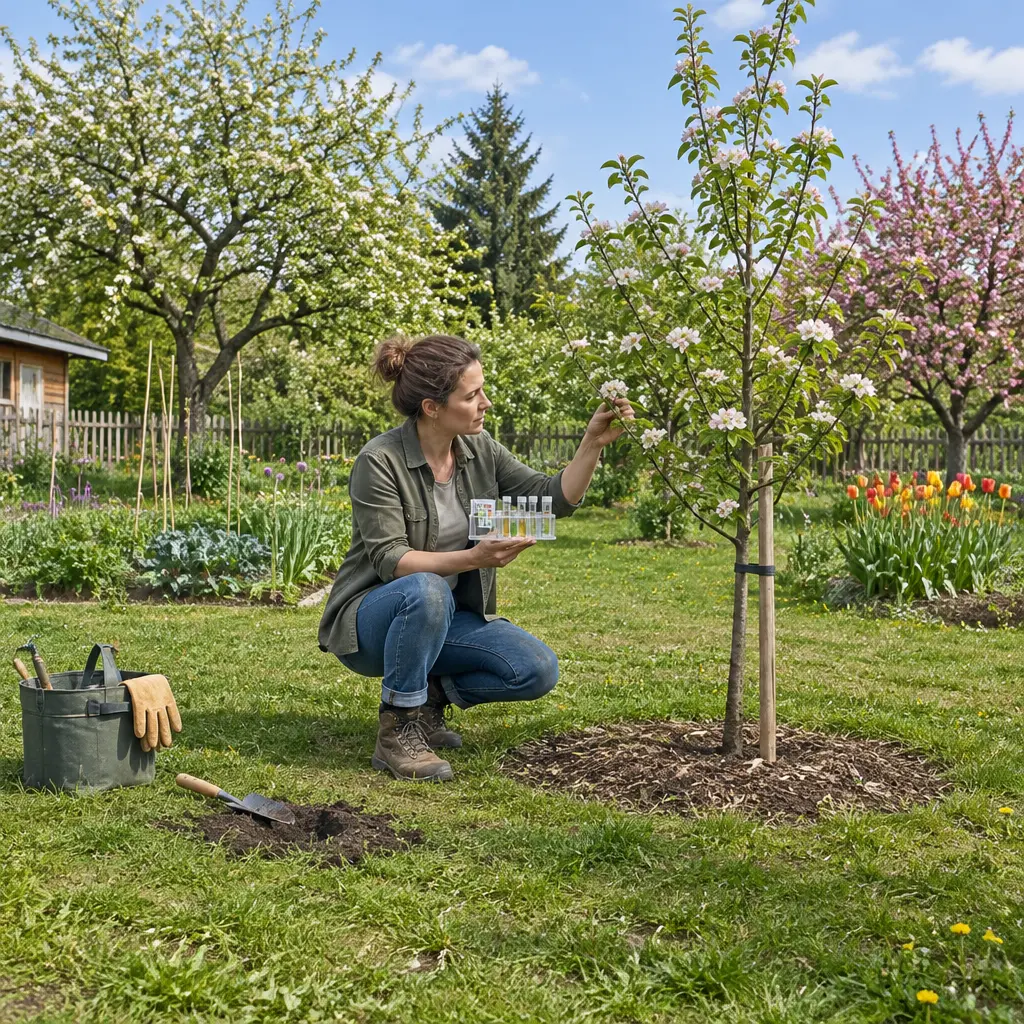
Choosing tree and crop species for your climate means matching plants to the conditions they will actually face—not just the average temperature, but also seasonal rainfall, frost, heat, soil, water availability, and future climate risk. The best choices are species and varieties suited to local hardiness and growing-season conditions, then checked against site-specific soil and water needs. This matters for both home gardens and farms: the U.S. Environmental Protection Agency reports that climate change is shifting growing seasons and increasing risks from heat, drought, heavy precipitation, and pests. A reliable selection process combines climate-zone information with local extension guidance, crop calendars, and practical trial data.
Climate suitability defines tree and crop selection
Climate suitability is the degree to which a species or variety can survive, grow, and produce reliably under a location’s climatic conditions. The USDA Plant Hardiness Zone Map defines zones using the average annual extreme minimum winter temperature, averaged over a 30-year period. It is useful for assessing cold survival, but it does not predict summer heat, rainfall, soil drainage, or the timing of the last spring and first autumn frosts.
A suitable choice therefore depends on several interacting factors: winter lows, summer highs, growing-season length, precipitation and its seasonal pattern, frost dates, and the plant’s biological requirements. The USDA’s 2023 hardiness map uses data from 1991–2020 and divides the United States into 13 zones, each spanning 10°F, with 5°F half-zones. These categories offer a starting point rather than a guarantee of performance.
Hardiness and heat tolerance
Hardiness describes a plant’s ability to withstand cold, especially winter minimum temperatures. Heat tolerance concerns its capacity to maintain growth and function during high temperatures. A tree can be hardy enough to survive winter yet struggle with intense summer heat, while a vegetable variety can tolerate heat but fail if the growing season is too short. Check both cold and heat requirements in nursery descriptions and university extension recommendations.
Growing-season length and frost timing
Growing-season length is the period between the last damaging spring frost and the first damaging autumn frost. It affects whether annual crops can mature and whether perennial plants have enough time to establish and harden off before winter. The National Gardening Association and local extension services provide frost-date estimates, but frost varies by elevation, slope, urban heat, and nearby water. Use local observations alongside published calendars, especially for crops sensitive to late frost.
Climate data guides species and variety choices
Climate data are measurements and summaries—such as temperature normals, rainfall, frost dates, and drought indicators—that help compare a planting site with a plant’s requirements. NOAA’s U.S. Climate Normals summarize conditions over 30-year periods, while the USDA hardiness map focuses specifically on extreme minimum winter temperatures. Taken together, these sources help narrow options, but neither replaces an assessment of the planting site itself.
Rainfall, drought, and irrigation
Annual rainfall alone can be misleading: a location may receive adequate precipitation overall but experience dry months when crops need water most. Compare seasonal rainfall with the plant’s water demand, soil water-holding capacity, and available irrigation. The U.S. Drought Monitor tracks drought conditions across the country, while local water agencies can clarify restrictions and supply reliability. For dry sites, consider drought-adapted species and varieties, and plan establishment watering for young trees, which are especially vulnerable while their roots develop.
Soil and site conditions
Climate suitability must be matched with site suitability. Soil texture, drainage, pH, salinity, and rooting depth affect how plants access water and nutrients. A low-lying site may collect cold air and suffer frost damage; a south-facing slope may warm earlier and dry faster. Soil tests from a university or public agricultural laboratory can identify pH and nutrient constraints. For trees, also check mature canopy size, underground utilities, wind exposure, and space for roots.
Tree species selection balances resilience and purpose
Tree selection is the choice of a woody perennial suited to local conditions and intended functions, such as shade, fruit, timber, shelter, or habitat. The U.S. Forest Service recommends considering site conditions and the tree’s mature size and needs rather than choosing by appearance alone. Native species can support local ecological relationships, but “native” does not automatically mean suitable for every soil, exposure, or future climate in a region.
Native and regionally adapted trees
Native trees occur naturally in a region, while regionally adapted trees may also include nonnative species able to grow reliably without becoming invasive. For example, a dry inland site may favor drought-tolerant oaks or pines recommended by local forestry experts, whereas a wet site may support different species. Consult state forestry agencies, arboreta, and extension services for local lists, and check invasive-species guidance before planting.
Fruit and nut trees
Fruit and nut trees have specific chilling and heat requirements. Many deciduous fruit varieties need a certain amount of winter “chill,” often expressed as chill hours, to flower and set fruit normally. Insufficient chilling can lead to uneven budbreak, while late frosts can damage blossoms. Select varieties recommended for the local region, confirm whether pollinizers are needed, and consider disease resistance as well as climate fit.
Trees for changing conditions
Climate-resilient planting accounts for plausible future conditions, not only historical averages. The Fifth National Climate Assessment describes rising temperatures and increasing climate-related risks across the United States, including drought and extreme precipitation in many areas. For long-lived trees, diversify species and avoid relying on one climate-sensitive choice. Regional climate projections and local forestry guidance can help identify species likely to remain suitable as conditions shift.
Crop species and varieties must fit the production calendar
Crop selection is the choice of a species and variety for a particular growing environment and production goal. Annual crops can often be changed from season to season, making them easier to adapt than perennial trees. The USDA Plant Hardiness Zone Map is not a crop calendar: vegetable planning also requires frost dates, days to maturity, soil temperature, and seasonal heat or water needs.
Annual crops and days to maturity
Days to maturity estimate how long a crop takes to reach harvest under stated growing conditions. In short-season climates, choose early-maturing varieties or use protected growing methods such as row covers, while still accounting for the crop’s temperature needs. In hot regions, heat-tolerant varieties and planting dates that avoid peak heat can reduce stress and improve quality. Seed packets provide a useful first estimate, but local trial results are more relevant than a single generic number.
Perennial and specialty crops
Perennial crops, including berries, asparagus, and many orchard crops, remain in place for several years, so their climate and soil match has long-term consequences. Evaluate winter survival, summer heat, chilling needs, disease pressure, and the time required to establish. Specialty crops may have narrow climatic requirements, so consult regional crop trials and extension publications before investing in plants, infrastructure, or processing equipment.
Cover crops and diversified planting
Cover crops are planted primarily to protect or improve soil rather than to harvest as a main food crop. Species such as legumes, grasses, and brassicas differ in their frost tolerance, rooting patterns, and water use. The USDA Natural Resources Conservation Service recommends selecting cover crops according to goals such as erosion control, nutrient cycling, or soil cover, while accounting for planting windows and local conditions. Diversifying crop types and planting dates can spread risk when weather is variable.
A practical process turns climate information into planting decisions
Climate maps and plant labels are most useful when combined with a step-by-step site assessment. A practical approach is to identify the site’s constraints first, then shortlist species and varieties, verify recommendations locally, and monitor results over time.
- Record the location’s hardiness zone, frost dates, temperature extremes, and seasonal rainfall.
- Assess soil drainage, pH, texture, slope, sun exposure, and available irrigation.
- Define the purpose of planting, such as food, shade, habitat, erosion control, or farm income.
- Compare candidate species and varieties for cold tolerance, heat tolerance, water needs, maturity, and pest or disease resistance.
- Check recommendations from local extension services, public nurseries, forestry agencies, and regional variety trials.
- Plant a diverse selection where practical, keep records, and adjust choices based on survival, yield, and weather.
A useful comparison chart can list each candidate’s minimum temperature tolerance, heat needs, water demand, soil preference, and time to harvest or mature. This makes trade-offs visible—for example, a high-yield crop may require more irrigation, while a native tree may better support local wildlife but need more room than the site allows.
Conclusion: match plants to place, purpose, and future risk
Choosing tree and crop species for your climate starts with climate suitability, uses reliable climate data, and then narrows choices according to tree or crop requirements, soil, water, and intended use. Hardiness zones are valuable for winter survival but must be supplemented with frost timing, growing-season length, heat, rainfall, and site conditions. Because climate is changing and long-lived plantings are difficult to replace, prioritize locally validated recommendations, diversity, and careful observation. Check your regional extension and forestry resources before purchasing, and keep records so future planting decisions become more resilient and productive.
Sources: USDA Agricultural Research Service, USDA Plant Hardiness Zone Map, https://planthardiness.ars.usda.gov/; NOAA National Centers for Environmental Information, U.S. Climate Normals, https://www.ncei.noaa.gov/products/land-based-station/us-climate-normals; U.S. Environmental Protection Agency, Climate Change Impacts on Agriculture and Food Supply, https://www.epa.gov/climateimpacts/climate-change-impacts-agriculture-and-food-supply; U.S. Drought Monitor, About the U.S. Drought Monitor, https://droughtmonitor.unl.edu/About.aspx; U.S. Global Change Research Program, Fifth National Climate Assessment, https://nca2023.globalchange.gov/; U.S. Forest Service, Tree Owner’s Manual, https://www.fs.usda.gov/research/treesearch/35957; USDA Natural Resources Conservation Service, Cover Crops and Soil Health, https://www.nrcs.usda.gov/conservation-basics/natural-resource-concerns/soil/cover-crops-and-soil-health.