
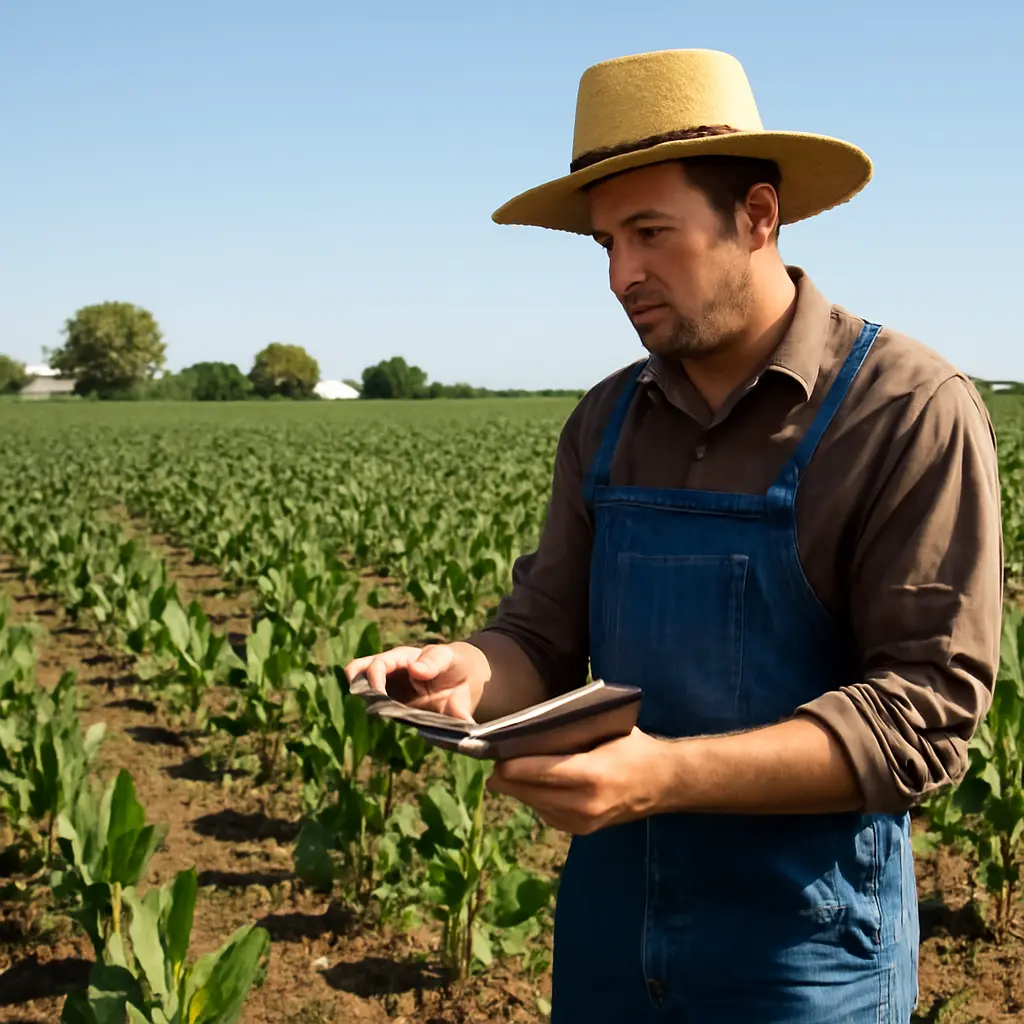
Pests moving north are crop-damaging insects and other organisms whose ranges are shifting into cooler regions as temperatures rise, seasons change, and trade and transport move them into new areas. The shift is already affecting agriculture: a 2021 study in Nature Climate Change estimated that warming could increase crop losses to insect pests by 10% to 25% per degree Celsius, with temperate regions facing especially strong increases. For growers, the practical response is not to assume every new pest will arrive, but to monitor changing risks, identify threats early, and adapt integrated pest management to local conditions.
Climate change is shifting agricultural pest ranges north
A pest’s range is the geographic area where it can survive and reproduce. Temperature helps determine that range: warmer winters can improve survival, while longer growing seasons can give some insects more time to feed and produce generations. Climate is not the only driver. Crops, habitat, pesticide use, natural enemies, and the movement of plants and goods also influence where pests establish. The U.S. Environmental Protection Agency (EPA) describes climate change as a factor that can alter pest distribution, abundance, and seasonal activity, though outcomes differ among species and places.
The risk is significant but not uniform. In the 2021 global analysis led by researchers at the University of Washington and published in Nature Climate Change, projected insect-driven losses for major crops increased by an estimated 10% to 25% per additional degree Celsius of global warming. The study examined maize, rice, and wheat and found that temperate regions could experience particularly steep increases. This is a model-based projection, not a forecast that every farm will lose that amount; local outcomes depend on the pest, crop, climate, and management.
Warmer winters and longer seasons
Many insects are limited by cold, so milder winters can allow more individuals to survive until spring. Earlier emergence and later autumn activity may also lengthen the period when pests can attack crops. In some species, a longer warm season can support an additional generation. The effect varies: extreme heat, drought, heavy rainfall, or mismatches with host plants can also reduce pest survival or reproduction.
Climate is one driver among several
A northward range shift does not happen simply because temperatures rise. A pest must reach a suitable location, find a host, and reproduce successfully. International and domestic trade can transport insects, eggs, and plant pathogens; changing land use can create new habitat; and the loss or arrival of natural enemies can alter population growth. The North American Plant Protection Organization and the U.S. Department of Agriculture’s Animal and Plant Health Inspection Service (APHIS) monitor pathways and report regulated pest threats, underscoring why surveillance and prevention matter alongside climate adaptation.
Northward-moving pests include insects, mites, and crop pathogens
“Pest” is a broad agricultural category, not a single biological group. It includes insects and mites that feed directly on crops, as well as weeds, plant-parasitic nematodes, and disease-causing organisms such as fungi, bacteria, and viruses. Climate change can affect these groups differently: an insect may expand its winter survival zone, while a pathogen may benefit from a longer period of leaf wetness or a change in the timing of crop growth.
Insects that feed on crops
Insects such as aphids, moth caterpillars, beetles, and true bugs can damage leaves, stems, roots, fruit, or grain. Some also transmit plant viruses. Their risk depends on more than their presence: crop stage, population size, weather, and beneficial insects all affect whether feeding causes economic loss. Growers should identify unfamiliar insects before treating, because a new sighting may be harmless or may be a beneficial predator rather than a crop threat.
Mites, pathogens, and weeds
Mites are close relatives of spiders and can become damaging under favorable conditions, including hot, dry weather for some species. Plant pathogens may spread through infected seed, soil, water, equipment, or insect vectors; their development is influenced by temperature and moisture. Weeds can also shift their ranges and compete with crops for water, nutrients, and light. These different threats call for distinct identification methods and controls rather than a single “pest” response.
Farm monitoring turns range shifts into manageable risks
Integrated pest management (IPM) is a decision-making approach that combines monitoring, prevention, and carefully selected controls to limit crop damage while reducing unnecessary pesticide use. The U.S. Environmental Protection Agency defines IPM as an effective, environmentally sensitive approach that relies on a combination of common-sense practices. In a changing climate, IPM also means updating scouting schedules and local risk assumptions as pest activity and seasonal timing change.
Scout fields and verify identification
Regular scouting helps distinguish a real increase from an isolated observation. Record the date, crop stage, location, pest abundance, visible injury, and beneficial organisms. Use field guides, extension services, diagnostic laboratories, or state and federal reporting systems to confirm unfamiliar or suspected regulated pests. A photograph and precise location can help experts assess a report, but suspected quarantine pests should be handled according to local instructions rather than moved or shared.
Use thresholds and multiple controls
An economic threshold is the pest level at which action is recommended to prevent a population from reaching the point where crop damage justifies the cost of control. Thresholds vary by crop, pest, growth stage, and market conditions. Where appropriate, IPM may combine crop rotation, resistant varieties, planting-date adjustments, sanitation, habitat for beneficial organisms, biological controls, and targeted pesticides. Following product labels and resistance-management guidance helps protect workers, pollinators, and the long-term effectiveness of control tools.
Coordinate across farms and regions
Pests do not respect property lines. Shared monitoring among neighboring farms, crop advisers, extension specialists, and agencies can reveal emerging patterns earlier than isolated observations. The USDA Climate Hubs provide regional information intended to help agricultural producers prepare for climate-related risks, while APHIS coordinates plant-health safeguards and pest-response programs. Growers can strengthen local readiness by knowing whom to contact, keeping scouting records, and reporting unusual outbreaks promptly.
Conclusion: prepare for changing pest pressure
Pests are moving into new areas as climate conditions shift, but climate is only one part of the story. Warmer winters and longer seasons can help some species survive and reproduce, while trade, habitat, crop choices, and natural enemies shape whether they establish and cause damage. Research indicates that warming could raise insect-related losses in major crops, making early detection and adaptable management increasingly important.
Farmers and advisers can act now by scouting consistently, confirming pest identifications, using locally appropriate thresholds, and combining preventive and targeted controls. Consult your Cooperative Extension office, USDA Climate Hub, and state plant-health officials for region-specific guidance, and report suspected invasive or regulated pests through the appropriate authorities.
Sources: Deutsch, C. A., et al., “Increase in crop losses to insect pests in a warming climate,” Nature Climate Change, 2021, https://doi.org/10.1038/s41558-021-01172-6; U.S. Environmental Protection Agency, “Integrated Pest Management (IPM) Principles,” https://www.epa.gov/safepestcontrol/integrated-pest-management-ipm-principles; U.S. Environmental Protection Agency, “Climate Change and Agriculture,” https://www.epa.gov/climateimpacts/climate-change-impacts-agriculture-and-food-supply; USDA Climate Hubs, “Climate Hubs,” https://www.climatehubs.usda.gov/; USDA Animal and Plant Health Inspection Service, “Plant Pests and Diseases,” https://www.aphis.usda.gov/plant-pests-diseases; North American Plant Protection Organization, “About NAPPO,” https://www.nappo.org/